Showing posts with label class notes. Show all posts

Sunday, October 23, 2011

Synthesis Essays--Class Notes

Class,

I was pretty happy overall with the synthesis essays. I think that our work with organizing paragraphs and the sense of an argument's "movement" really helped you all improve your writing. I also think that the out of class peer review had something to do with the overall improvement of the writing. I'd like to believe that you all took a lot from each other's reviews. Yeah getting those out of class peer reviews in were a pain--not to mention, a pain to grade--but I think it ultimately served a purpose.

I hope that the style lecture on Friday helped you think about your writing on a more sophisticated sentence level. Feel free to review it via the embedded Prezi.

A couple of grammar/style/convention things I saw all across the board:

1.) Titles of essays are ALWAYS in "quotations." Italics are for books and full length featured films (among other things). Thus,  "Achievement of Desire," and not Achievement of Desire.


2.) In-text citations always go at the end of sentence right before the period. Thus, 


Rodriguez introduces the concept of the "scholarship boy," a concept culled from Richard Hoggart's Uses of Literacy (Rodriguez 516).


3.) Punctuation and quotation marks: If you are citing part of a text and you use a comma afterwards, the comma goes within the quotations. Thus, 


Wallace writes that education's purpose is to "just a little less arrogant," a little bit less self-certain (Wallace). 


4.) If you cite a passage that is 4 lines of text, use a bloc quotation, indented 1 full inch to the right. Bloc quotation do not have quotation marks around them. 


5.) A semi-colon can only be used when you have two independent clauses (two complete sentences) to join together.  Thus, 


Correct: Rodriguez argues that the scholarship boy is a great mimic; Freire would agree with this. 


Incorrect: Rodriguez argues that the scholarship boy is a great mimic; and Freire may see it the same way. 


With the addition of the "and,' the second clause becomes a sentence fragment. 


6.) In general, Watch out for run-on sentences. Sometimes we get too carried away and forget to PUNCTUATE. 

Friday, October 21, 2011

Wednesday, October 19, 2011

Thursday, October 13, 2011

Synthesis Theses

Through speaking with a student, I have figured out a way to explain how to come up with (or "generate") a thesis for the synthesis. The general structure of a synthesis thesis is something like:

All these essays relate to one another, but. . . .

The key is to make this relation and these differences meaningful by making the thesis specific to the three essays.

The only way to do this is through READING and RE-READING. Your thesis may be the last thing that you actually write down on the page. It is only through moving through these essays, noticing patterns and divergences, similarities and differences, that thesis (and thus, meaning) will emerge, as I noted in our lecture. Its through looking at the concrete connections and then distinguishing them that paragraphs will emerge, which will lead to an organization, which will lead to your own thoughts about the essays. You already have ideas about each of the essays independently, the task now is to think about all three essays as a whole.

If you do not have a thesis, but have "readings" of each of the texts, hopefully your peer reviewers can help you draw one out.

I recommend that you write a little paragraph TO each of your peer reviewers about what you feel like you need to work on that your peer reviewers can help you with (in addition to the assigned tasks). I want you to read each other's papers as if they were your OWN papers that you would have to turn in. I want you to help each other write each other's paper as a collaborative effort. This is not "cheating"--this is collaboration and realizing that meaning rarely comes from one's own head alone.

Good luck!

Wednesday, October 12, 2011

Organizing Paragraphs

Today, I will be sending you a Word document of the completed (rough draft) of my essay with explanations about the paragraphs and organization.

I hope that I have shown the importance of organization and topic sentences. I feel like when I first learned about topic sentences that they would make my writing sound mechanical and boring (and indeed, I learned topic sentences out of the context of an actual paper). But really, they (along with transitions) are essential aspects of a paper.

As such, this will be something heavily weighed in the Synthesis assignment.

Thank you everyone for such great classes today. Participation was great (due to the very helpful suggestion to return to the cards) and I felt like we were all engaged.

Monday, October 10, 2011

Synthesis Outline

Technology's Peril and Potential 

I. Introduction
       Introduces context
       Summary of texts
       Synthesizing thesis 

II. Compare and contrast of text's "problem" focus
      provides examples and elaboration

III. Compare and contrast text's "response" to this problem
      provides examples and evidence to support point

IV. Synthesis on "moral" questions
      Provides examples from own life/student's "own" thinking

V. Conclusion: reiteration of points, shifting to "we," offers reflection on "warnings" of technology. 


This is a basic outline of the article I sent you all as an example. Again, I'd like to reiterate that you can use these three texts in different ways in order to get your point across. However, the main thing I will be looking at in this synthesis is the flow/structure of the argumentation. I want you to "get somewhere" in the paper.

Saturday, October 8, 2011

DFW blogs and Future Synthesis

A lot of you definitely got what DFW was saying in the commencement speech. I realize that this was the "easiest" piece we have read because it was originally given orally and it is a genre that we are all familiar with. Freire's work in particular is of a "theoretical/philosophical" genre that makes it more difficult to comprehend and Rodriguez's was a lengthy scholarly essay.

In your syntheses, it will be really important to not merely erase the several differences among these 3 articles. Indeed, I would recommend that you discuss the three articles in a particular order, showing their relations through making your own argument. Many of you seem to be partial to DFW's point, which is fine. One of the best ways to actually write something meaningful is looking at each piece as a "challenge" to the other. I would argue that much of Freire's piece challenges DFW's piece in ways that we have not explicitly discussed.

The best way to do this is to pay close attention to each of the texts. It will be imperative that you move past summary into more close reading. You will most likely  have to re-read Freire (and Rodriguez) since they have probably faded a bit from your mind.

Friday, October 7, 2011

David Foster Wallace

"I just think that fiction that doesn't explore what it means to be human today isn't art"

short and sweet today. Can't concentrate. Looking forward to seeing what you all wrote about the speech!

Wednesday, October 5, 2011

Synthesis Prezi

Monday, October 3, 2011

Philosophical Background to "Banking Concept"

Throughout this post I have provided several links to Stanford Encyclopedia of Philosophy's entries on these major philosophers. I strongly encourage you to explore these pages and prepare to be perplexed at some of the most original thinkers in human history.


Rene Descartes

"Cogito Ergo Sum"

I refer you to the the Standford encyclopedia of Philosophy for a more thorough overview of Descarte's philosophy.

Descartes is famous for his "cogito, ergo sum," meaning "I think, therefore I am." This identified the "real" part of the self as the mind and not the body. The body, for Descartes, is a mechanism controlled by the mind. Descartes had a strange idea that the mind was connected to the body by the "pineal" gland in our body. The "mind" for Descartes is also related to what we might call "soul" to use more theological term (its important to note that Descartes is not an atheist and has involved "proofs" for the existence of God based on his philosophy).

For our purposes, we need to realize that for a strict Cartesian the body is part of the world which are "objects" and we, as thinkers, are "subjects." I mentioned the correspondence theory of truth, which means that we need to attach ideas that we have "in our minds" to objective reality "out there." Descartes was a rationalist which means that we did not get our "ideas" from the external world. Rather, our ideas come from our reason.


Edmund Husserl and Phenomenology

Edmund Husserl was a German philosopher responsible for the philosophical movement phenomenology. The Stanford Encyclopedia of philosophy defines phenomenology as

"the study of structures of consciousness as experienced from the first-person point of view. The central structure of an experience is its intentionality, its being directed toward something, as it is an experience of or about some object. An experience is directed toward an object by virtue of its content or meaning (which represents the object) together with appropriate enabling conditions." (see above link)

For our purposes, we need to note that phenomenology tries to understand the mind and the body (and the world) for that matter as inextricably intertwined with one another. We are embodied beings and what we called the "world" is not some objective reality "out there" but is created through our experience of the "phenomenon of the world." In contrast, Descartes believed that the mind could be "disembodied" and it would still constitute a subject. Phenomenology led to Sartrean Existential Phenomenology, a major influence on Paulo Freire.


"Intentionality":  "The central structure of an experience is its intentionality, the way it is directed through its content or meaning toward a certain object in the world."

Heidegger

 
We "intend" toward objects because they have meaning for us in the world.


Heidegger, Sartre, and Existentialism'


Jean-Paul Sartre


Existentialism is a difficult term to define. As I said in class, we could define it along with Sartre as "Existence Precedes Essence." Or, we could, along with the Stanford Encyclopedia designate it as "“Existentialism”, therefore, may be defined as the philosophical theory which holds that a further set of categories, governed by the norm of authenticity, is necessary to grasp human existence."

However, I would prefer to look at some of the basic ideas/revolutions in thinking of two major thinkers: Jean-Paul Sartre and Martin Heidegger

Heidegger

If we remember from above, Husserl claimed that we "intend toward objects" in the world based on the meaning they have for us. Existentialism is a philosophy that speaks about the meaning of human existence and not merely the "fact" of it. As Freire writes, the "Banking concept" does not take into account the meaning of information:

"The outstanding characteristic of this narrative education, then, is the sonority of words, not their transforming power [. . .] the student records, memorizes, and repeats these phrases without perceiving what four times four really means or realizing the true significance of 'capital' in the affirmation 'the capital of Para is Belem" (Freire 318).

A very basic way to understand Heidegger's revolution in thinking is that he thinks about objects as intended objects and affirms that this is the more "essential" way we relate to the world. In other words, we relate to the world not in terms of objects "facts" but what we do with the objects and others that surround us.

The famous example is a hammer. We orient ourselves toward the hammer in order to, for instance, hammer in a nail. We do not see the hammer as an indifferent object, we see it as a tool for use. Heidegger calls this "ready-to-hand" rather than "present-at-hand." Heidegger argues that this is the first way we are in the world. The world is meaningful for us we do not "add" meaning onto an object (as if it were a "quality" added to a "substance").

The "world" is not an objective existence "out there" but rather something formed out of language and meaning. Without man (what Heidegger calls Dasein) there is not world (see Freire pg 325).

Sartre

Sartre's mantra is about human action tranforming the world. We are both "free possibility" and what he calls "facticity." Drawing on Heidegger, we are both "free" and situated. We have many possibilities but we are located in a history (individual and collective). Thus, the situation calls for action from the human subject. For Sartre, the world challenges us to respond and it is only by this response that we in turn act on the world and become.

The relevant idea in Sartre is that if we think that we are "completely free" or "completely determined" we are in what he calls "bad faith." Sartre offers some very concrete examples of what it means to be in "bad faith"


"Sartre cites a café waiter, whose movements and conversation are a little too "waiter-esque". His voice oozes with an eagerness to please; he carries food rigidly and ostentatiously. His exaggerated behaviour illustrates that he is play acting as a waiter, as an object in the world: an automaton whose essence is to be a waiter. But that he is obviously acting belies that he is aware that he is not (merely) a waiter, but is rather consciously deceiving himself.[1]

Another of Sartre’s examples involves a young woman on a first date. She ignores the obvious sexual implications of her date's compliments to her physical appearance, but accepts them instead as words directed at her as a human consciousness. As he takes her hand, she lets it rest indifferently in his, refusing either to return the gesture or to rebuke it. Thus she delays the moment when she must choose either to acknowledge and reject his advances, or submit to them. She conveniently considers her hand only a thing in the world, and his compliments as unrelated to her body, playing on her dual human reality as a physical being, and as a consciousness separate and free from this physicality.[2]

Sartre tells us that by acting in bad faith, the waiter and the woman are denying their own freedom, but actively using this freedom itself. They manifestly know they are free but do not acknowledge it. Bad faith is paradoxical in this regard: when acting in bad faith, a person is both aware and, in a sense, unaware that they are free." (from wikipedia)


Applied to Freire and education, if we believe that our students are "passive" we deny their ability to act freely and transform the world. However, at the same time we have to be aware that each student is coming from their own history and facticity. To quote from Freire:

Accordingly, the point of departure must always be with men and women in the 'here and now', which constitutes the situation within which they are submerged, from which they emerge, and in which they intervene. Only by starting from this situation--which determines their perception of it--can they begin to move. To do this authentically they must perceive their state not as fated and unalterable, but merely as limiting--and therefore challenging (Freire 327)

It is here where Freire begins to define "problem poses education as the "problem of situation." By becoming aware of their situation (coming to consciousness as a class or even as an individual) students are able to realize that the very (historical) situation they find themselves within is a "problem" to be questioned and one to be acted upon.


Hegel and Marx: Transforming History
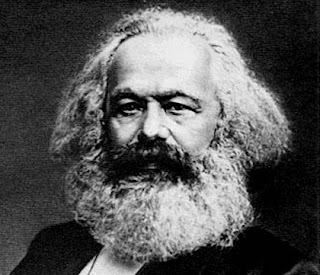

Karl Marx

G.W.F. Hegel

 Hegel

Marx worked out of the tradition of Hegel, a prolific philosopher who basically thought he had accounted for all of history and human thought. Anyone working in the tradition of "continental philosophy" nowadays is working both with and against Hegel (he is a figure to be reckoned with).

In "The Banking Concept," Freire refers to not Hegel's theory of history (which I very very quickly explained in class today), but Hegel's "master-slave dialectic":  "The students, alienated like the slave in the Hegelian dialectic accept their ignorance as justifying the teacher's existence--but, unlike the slave, they never discover that they educate the teacher" (319). The master-slave dialectic recognizes that the relationship between master and slave is complicated because the master, in order to be a master "needs" the slave (or else, he would not be a master). This example is much more complicated than this, so I refer the interested reader to the wikipedia page for more elaboration.

Marx

 Marx wrote in his Theses on Feuerbach, "The philosophers have only interpreted the world, in various ways; the point is to change it."

Indeed, the whole text of the "Theses" is about moving from description of the world to transforming the world as Freire writes in his text:

The world--no longer something to be described with deceptive words--becomes the object of that transforming action by men and women which results in their humanization. (328)
 This is basically what Marx/Freire means by praxis--human action and theory are inevitably intertwined. Theorizing about the world is also acting in the world.

We act in the world and try and transform the world in order to overcome alienation. While "alienation" has some everyday language connotations, Marx is talking about a specific form of alienation--alienation of labor:

It is important to understand that for Marx alienation is not merely a matter of subjective feeling, or confusion. The bridge between Marx's early analysis of alienation and his later social theory is the idea that the alienated individual is ‘a plaything of alien forces’, albeit alien forces which are themselves a product of human action. In our daily lives we take decisions that have unintended consequences, which then combine to create large-scale social forces which may have an utterly unpredicted effect. In Marx's view the institutions of capitalism — themselves the consequences of human behaviour — come back to structure our future behaviour, determining the possibilities of our action. (from Stanford Enyclopedia entry on Marx)

Thus, just as we are alienated from our labor in Marx, so Freire argues that we are alienated from our own education. What is the consequence of this? The Banking Concept of Education.

 Conclusion

I hope I have shown both in and out of class the complex history and background of Freire's thought. It is not merely an exploration of the classroom situation, but the very idea of education and its relation to authority, power, subjectivity, freedom, possibility, and revolution. It is philosophically grounded in Marxist, Existentialist, and Phenomenological thinking.


Despite having spent about an hour on this post, I have only scratched the tip of the iceberg of these thinkers. Without the texts of these philosophers before me, I feel like I have done them a disservice in my explanations, but we have to start somewhere.

Friday, September 30, 2011

Taxes, Poor People, and the rhetoric of the animal

The Daily Show With Jon StewartMon - Thurs 11p / 10c
World of Class Warfare - The Poor's Free Ride Is Over
www.thedailyshow.com
Daily Show Full EpisodesPolitical Humor & Satire BlogThe Daily Show on Facebook


Context: Here, John Stewart is criticizing conservatives claim that raising the taxes on the rich would not help balance the budget.

1.) He shows how conservatives contradict themselves when they say that "we have to start somewhere" (meaning cutting programs), but say that raising taxes on the rich will not produce enough revenue to help the budget.  "When its cuts its a million dollars, but when its taxed its 700,000,000 milion dollars. . ."  

2.) Rather than taxing the rich, the conservatives argue that we should consider that "51%" of Americans pay nothing at all. The solution: we should "broaden the base,' which means that we need to make sure everyone pays something in income taxes. This yields the claim: The poor are on a 'free ride'

a sub point that Stewart makes between the main arguments is that these people don't have a job. Furthermore, his rhetoric "esta over" is a (not so) subtle claim that the poor are mexican immigrants (who are purportedly 'taking our jobs away'). This is not so much an argument, but a suggestion by Stewart that the conservatives may be targeting a particular class of people--immigrants. This is significant because immigration is another important issue in today's political climate.

3.) Conservatives: Taxing the 'poor' (euphemistically said 'broaden the base) will help balance the budget.

4.) Stewart: The poor control 2.5% of our nation's wealth. Stewart rounds this figure to about 1.4 trillion dollars "of everything they have on this earth."

5.) Stewart proposes let's take half of that. That's a 50% tax on the poor's income, which is an insane tax rate that would never pass. The conservatives are merely calling for a contribution, but surely even they would not tax 50%!

6.) Half of 1.4 trillion is 700,000,000 ---Where does this number sound familiar?

7.) 700,000,000 dollars is the amount of revenue (within 10 years) that would occur if we raised the tax rate on the top 2% only minimally (at least that's the way I understand it. For more information about this see:  http://www.nytimes.com/2011/09/18/us/politics/obama-tax-plan-would-ask-more-of-millionaires.html?pagewanted=all).

8.) Conservatives claim this is only a "fraction" of the government's budget, but this is precisely the amount that we would be able to generate if we took half of what the nation's poor owned in this world.


So, even if the tax base is "broadened" and everyone pays something (the bottom 50% included), considering that no sane person would consider taxing the poor 50% of what they own, this will generate less revenue in order to balance the budget.


The bottom line: a wavy one at that. . .

Since the conservatives  can no longer appeal to an economic incentive, their argument can only be justified by what one might call "fairness." The question we would then have to ask is, is it fair for the "makers" to carry the "takers" in the society? Is it fair for the rich to be burdened with balancing the budget?

This is a complex question and one that depends on your beliefs of the role of government, the role of business, and the role of the nation's wealthy. As Stewart points out in another segment regarding our "first world" status, we may be considered "third world" in that we have a VERY large gap in income inequality.

Now, the argument we might make is that these "rich" people are job creators and producers in society whereas many of the poor are not. However, we have to ask if our society would even function if all of these people stopped working their more mundane jobs that are supposedly created through the rich's benevolence. Who is more "productive" in society: the cleaning ladies at a hotel or big investors?

I want to make clear that this is not an easy question and it rests on one's values and definitions. However, there does seem to be a kind of misunderstanding or disregard for people we consider poor. Before we claim that it is "unfair" for the rich to carry such a burden, we need to remember that we are not all on an equal playing field. Rather, there are historical circumstances that have advantaged some people at the expense of others. To claim that the status quo is not already implicated in a kind of "class warfare" does not take into account the socio-political history of this country.

Furthermore, the fact that the "poor" have "modern conveniences" just show how necessary it is to have things like cell phones to participate in today's society.

Rhetoric of the Animal

 Indeed, if these people did not have these "modern conveniences" we may consider them more like "animals" because they are still using "primitive" methods. So, it seems as though we are saying that having these modern conveniences doesn't make them any less of an animal. As Stewart points out, this rhetoric is already employed in conservative arguments. The poor are described as:

Parasites
racoons
"irresponsible animals"

Ascribing animals status to those of us who are different than us in order to persecute them is a common tactic when we want to commit some sort of injustice against them. As an analogy, we used the same kind of language to designate Jews (they were "rats") who were destroying the economy. I make this statement NOT to suggest that the conservatives are like "Hitler," but rather that the use of these terms have justified some pretty horrible stuff. I refuse to engage in the hyperbolic rhetoric that calls Obama Hitler or Bush Hitler, but it is a fact that calling the poor "parasites" and "racoons" resonate with historical rhetorical tactics.

Compare this "animal rhetoric" with the way Buffet (and sometimes conservatives) claim they are being treated:

"These and other blessings are showered upon us by legislators in Washington who feel compelled to protect us, much as if we were spotted owls or some other endangered species" (Buffet, "Stop coddling the rich").

Buffet is not the only one to use this rhetoric, as Stewart points out in another segment.


The Daily Show With Jon StewartMon - Thurs 11p / 10c
Moneybrawl - The Extinction of Subway, Bill O'Reilly & the Super Rich
www.thedailyshow.com
Daily Show Full EpisodesPolitical Humor & Satire BlogThe Daily Show on Facebook


The Rhetoric of the Endangered Species

So let's recap here. We have a contrast between 2 types of animal:

The Poor are parasites, racoons, , 'animals' (in general) 

These are all animals that we consider "pests" who mooch off those who are "producing." But, of course, we would have to take into account that racoons are only mooching off, say, the middle class, who are not producing that rotten produce that they throw away because its a day old, but bought it at a grocery store. A grocery store that probably shipped that rotten tomato from some poorer country, who are producing the 'produce' we sell in the store.

The Rich are endangered species

Why do we protect endangered species? Do they add something essential to our ecosystem? Have we forgotten the idea of natural selection?

I'd like to suggest that perhaps we protect endangered species because they are beautiful to behold. To be really cynical, its as if we protect them so we have a more diverse zoo for human beings to look at. Endangered species are the "exceptions" to the animal realm--they are the rare ones that are difficult to attain. Sound familiar? Are we creating diversity or are we valuing these animals because they are rare like how we value people of an exceptional nature and in the same way that we except ourselves from the designation "animal"?

To end my exploration, I'd like to return to the response to Warren Buffet's article:

"The best way to balance the budget is for the economy to produce a lot more American success stories like Warren Buffett." (Stephen Moore, "Warren Buffet is wrong on Taxes"). 


Just as we see endangered species as exceptional, rare, and important, we see millionaires/billionaires as exceptional, rare, and important. Why do we look up to these people as if they were superhuman beings? Do we really want to be them?

Tuesday, September 27, 2011

Summary/Analysis: Reflections


 Organization/Paragraphing
The biggest problem I saw with the summary/analysis was the way paragraphs were formed and organized. Although sentence level issues related to grammar and style were frequent also, they are less important as they can always be fixed and honed.

If you organized your paragraphs as a kind of "chronological" analysis, your paragraphs were uneven and rarely focused on one point. Instead, they drift off in other directions. In order to write about any text, you must be able to create your own "temporality" that you can write within. Your argument should somehow "develop" or "move" and you need to be able to signpost these movements with words like "Although," "However," "But," "In contrast," rather than merely saying "x" represents this. Although this may be a great way to take notes (simply moving through the video and interpreting all the images), it produces a disorganized and non-unified paper.

I suspect that some of this stems from your wish to speak in terms of "symbolizing." Now, I am not saying in the least that there are not symbols within the Kanye West video (Sword of Damocles, Horus Chain, daggers,etc), but you have to be able to say something with these symbols more explicitly than that they "relate" to power. When discussing things" symbolically, it seems as though you think that the argument does not have to move linearly in some sort of logical progression. Furthermore, its important to show how these symbols connect with each other. These images cannot be interpreted in isolation of one another--they are all part of the same 'image'/painting/video.

 You have to decide what your paragraphs will be "about"--this is what teachers have meant by "topic sentence" and then you can take paragraphs, move them around, and think about how to transition between them. What is the connection between one paragraph and the next? What is the connection between a paragraph on the women surrounding Kanye and the men that replace them? Is it one of contrast? analogy? etc. etc.

This "movement" of paragraphs  is what Bartholomae and Petrosky mean by writers "punctuating" essays. We will talk more about this as we move through the other texts we will be using.

Sentence-Level issues


A couple of common ones:
  • avoid "you" as much as possible
  • avoid using contractions (don't, can't, etc.) in any formal writing--it sounds too colloquial 
  • check for unneeded words and passive voice. Examples of unneeded words are intensifying adverbs and adjectives  like "completely," "obviously," "clearly," "very," "really." 
  • Unneeded passive voice--this only obscures what you are trying to say (or poorly masks that you have nothing to say)

Monday, September 26, 2011

Argument

 Prezi: 


Syllogisms and Enthymemes

I hope you all enjoyed your little logic lesson in Syllogisms and enthymemes. Just to review, I will post an example of the syllogism I wrote on the board today in class.

Major Premise
Minor Premise
Conclusion

A is B
B is C
Therefore, A is C

All men are mortal
Socrates is a man
Therefore, Socrates is mortal

Enthymeme:  A syllogism that is missing one of its premises, which assumes an underlying connection between the first and third premise.


Socrates is a man, therefore Socrates is mortal.  The implied premise here being all men are mortal.

The "underlying assumption" is the point I wanted to get across most forcefully in class today. An underlying assumption tends to be a value held by a particular audience or group of people. By identifying these values, one can understand where an argument is coming from. Attacking the underlying assumptions is a great way to attack an argument!

An underlying assumption in a lot of arguments can be framed as an imperative, that is, as what one "should" or "ought" to do. 

For example, in 3rd period class, we did an exercise (on pg 345) "Creating argument schemas.

Claim with reason: We should buy a hybrid car rather than an SUV with a HEMI engine bceaues doing so will help the world save gasoline.

underlying assumption: we should save gasoline (even more specific: we should help the world conserve gasoline). Or, "saving gasoline is good" (the "good" and the "should" sort of amount to the same thing here)

Thursday, September 22, 2011

Peer Review Process

This first 30 minutes of class will be silent. We will not talk to the person who has our draft. We will keep reading, re-reading, and writing notes that will help us discuss the draft.

I. Exchange drafts with a partner

II. Read Draft once all the way through, marking only places that you are confused are are particularly good (without comments)

III. Identify and write down what you consider their "thesis sentence." Now rephrase their thesis in your own words. If you cannot find a thesis, mark that.

III. Identify 4 things:

1.) At least one spot in the draft you are reading where you were confused; explain why in "readerly" terms ("I was confused when. . .because. . ." rather than "your sentences are confusing)

2.) At least one place where the ideas seem "thin" and may need more development/elaboration

3.) At least one place where you do not see the significance of what the other person is saying--why is it there? so what?

4.) At least one place where you could play "devil's advocate" or 'object' to the writer's ideas.

IV. Check for grammar/spelling/syntax errors.

V. Edit for "style" (if you think things can be said better).

VI. Write a final "summary" of the review. What are its "strong points" what are its "weak points" Make two-three suggestions for revision.

For the remaining 15-20 minutes of class, discuss your notes on the student's draft. This is also the time when you can raise your hand and ask me questions.

Wednesday, September 21, 2011

Richard Rodriguez's "The Achievement of Desire"

Today, we had a couple of really great discussions about this essay. Mostly we focused on "content" oriented comments rather than form, but this is a great essay for students to relate personally to. My hope is that the essay resonated in a way that Biss may not have as all of you are currently involved in separating from your parents, whether or not they are like Rodriguez's parents.

In the first section, I forced all of you to talk for 15 minutes (you talked for 25) without me saying a word. I was impressed by the class's ability to mediate and facilitate their own discussion! I want to do more of this because I believe in fostering conversation among students and not just addressing me as the teacher-as-judge "well yes, that is very interesting, but. . ."

I hope that writing for a bit at the beginning of class helps you all have something to say--these essays are hard to hold in one's head. Furthermore, you may be able to just transfer some of that stuff to your blog!

We talked about several things:

  • The difference between college and high school with regard to parents expectation
  •  
  • The idea that Rodriguez was "bookish" but not necessarily a good reader
  •  
  • How we tend to get "lost" in reading and questioning whether the kids of today have a harder time reading because of the various distractions. 
  •  
  • Personal connections with trying to balance your family's culture/language and the "educated" language one learns in college. How one's family can seem "ignorant" but not "stupid." This comes with a sense of guilt.

  • I think it was Shirley who said something about being the "translator" for one's family and how frustrating that can be. "Why don't you just learn English?"

  • Katie discussed how she could not imagine a childhood without reading with her parents. We found that not everyone had that luxury. 


In the other class, because of the set-up, we were unable to do the same activity, which is unfortunate. Katie, Micole, and Brianna discussed how Rodriguez's experience reminded them a lot of Matilda (a great movie and a good connection!)


Elina discussed how she understands where Rodriguez is coming from because english is her 3rd language (which astounds me given Elina's mastery of spoken English!).


Zach talked about how some people have the opposite experience of Rodriguez--where many kids who have "genius" parents (a word that Micole used to describe her parents) cannot or do not want to live up to that (or feel like they HAVE to). This can also present problems. This reminds me of Laura's point (in the other class) that since her dad is an engineer, she can do complex physics problems with him in a way that may isolate other members of her family.


Arti asked a question about Rodriguez's capitalization of Romantics. I explained that the Romantics are a literary/artistic movement. Poets include Shelly, Wordsworth, Coleridge, Goethe (German), Edgar Allen Poe, etc. There are also Romantic painters. Romantics tended to praise the working-class and, as Rodriguez argues, because it is "and adult way of life."


-----------------------------------------------------------------------------------------------------------


For my blog today, I want to talk about some of the rhetorical techniques Rodriguez uses to write about his experience.


1.) Repetition


Rodriguez repeats several phrases throughout the text, the most significant one being "Your parents must be proud." Why does he repeat this phrase? I see two reasons: First, he hears it over and over again so he mirrors that fact in his prose. Second, he wants to show how that phrase constantly has changed meaning with the context in which it was spoken. At first, he has an answer, but then he is not so sure.


2.) Incorporating other people's language into his prose


Beginning with the above phrase, we notice that Rodriguez quotes people so as to make his essay more like a narrative. Sometimes these are explicit, such as "Hey Four Eyes!" and when he tells his father "I'll try to figure it out some more by myself" (516).


But other times, he puts the discourse in parantheses. examples: ("Your parents must be proud. . ."), his father's words, for instance when Rodriguez is explaining his father's past: "He had great expectations then of becoming an engineer. ("Work for my hands and my head")" (522). The reader can assume that this is how is father speaks and explains his choices. Another example might be helpful here: "Later he became a dental technician. ("Simple")" (522).

We get the sense that his father is a man of few words. This recalls for me Rodriguez's interest in the "complex sentences" of his teacher rather than the "Sentences of astonishing simplicity" that seemed lifeless (525). Perhaps his father's discourse is like the lifeless, simple sentences? Contrast his mother and father's discourse with the big, bloc quotes from Hoggart's text, filled with complex sentences. What is the effect of Rodriguez incorporating quoted lines from people he describes? Why does it have this effect?


 3.) Varying sentence length (sometimes breaking conventions): "I kept so much, so often, to myself. Sad. Enthusiastic. Troubled by the excitement of coming upon new ideas [. . .] Alone for hours. Enthralled. Nervous." (520).

Why these one word sentences? Is Rodriguez here struggling to describe his emotions?


-------------------------------------------------------------------------------------------------------------

What is left out?

What is left out is more traces of his Hispanic origins! We have two spanish words cited, both from his mother and father, in the entire essay.

gringos (520) (although, for some reason, this word is not in quotation marks. Rather, the word in quotation marks is "shown." Why is that? I'm not sure) Denotes foreignness--particularly people from the United States.

iPochos! (519)

What is a Pocho? (and why the I? is this a grammatical construction particular to Spanish?)  How does this word, this one Spanish word, relate to the whole essay? Why is it that he only uses these two Spanish words?

I looked it up--will you?

Monday, September 19, 2011

Summary of Research Prospectus

A research paper should. . .
  • pose an interesting and significant problem
  • respond to the problem with a contestable thesis*
  • use sources purposefully and ethically
 Today, I elaborated on what constitutes a contestable thesis. Contestable means, to put it simply, that you can imagine a rational audience that may disagree with your point. It means that you have tension in your thesis. I gave the example of the girl who wrote a paper on heart disease without a point that could really be contested (or showed why her point might be contested--this is an important part of the paper).

I also explained the research prospectus which can be found on Sakai.

Topics Focus --> Question Focus

We now want to make sure we ask a good research question rather than just circle around a topic. Having a question focus will do 2 things:
  • requires you to be a critical thinker who must assess and weigh data and understand multiple points of view
  • encourages active construction of meaning

Friday, September 16, 2011

The Pain Scale--Class Notes and a preliminary interpretation


Today in class, we read "The Pain Scale" by Eula Biss. This is an interesting piece--a prose piece that reads more like poetry. The very first adjective we came upon for this piece was "weird" (in BOTH classes!). I understand that. The piece does not easily fit into a genre. Is it fact? Is it fiction? Is it autobiography? Perhaps all of these things?

My students described the piece's tone as "thoughtful." I think that this is the mode of the piece. It is a kind of figurative exploration of pain and measurement. I think the tone wavers between a kind of "objective" fact checking and doubt. Biss will claim something, but then immediately put it into question. For instance, when she discusses the Christianity that is not hers, it seems that she is critiquing that religion. Indeed, she does seem to be critiquing the idea that "pain is holy." Biss instead takes comfort in the idea "This too shall pass," a phrase taken from the bible. This phrase, these words, become "holy" to Biss (181).

BUT WAIT! Is this phrase in the bible? A simple google search will reveal a controversy over these very words: http://wiki.answers.com/Q/Where_is_this_too_shall_pass_in_the_bible. The way this person explains it is that this is derived from biblical teachings. Hmmm. . .so this is a fiction we've come up with, based on biblical teachings, that help us through life. So why is it in "quotations"? It is not an actual citation from the bible, but a saying, some common wisdom. These words, which are actually not holy in the sense that they were written by God (according to Christian belief in the bible) but rather they become holy for Biss. The secular and the religious mix, just as math mixes with Christ. The point here seems to be that the main "teachings" of religion can help us through life, can even become something we have "faith" in, but has nothing to do with "knowledge" in the strict sense. We do not have to believe in the Christian Mystery to take comfort from "This too shall pass." We do not have to believe suffering is divine. Indeed, this phrase focuses on the transitory nature of existence, like something from Ecclesiastes ("All go unto one place; all are of the dust, and all turn to dust again.").

This sort of indifference to the truth of Christ's birth goes back to the section "0," where Biss writes, "the problem of zero troubles me significantly more than the problem of Christ" (171). In a way, she wants the enigmas to go away, she wants to be able to do something with her knowledge--she wants to measure it. Is this not why we have scales? This divorce between knowledge as Truth (and certainty) and knowledge that helps us deal with life is a theme that permeates the text. She begins this idea here: "I'm sitting in the hospital trying to measure my pain on a scale from zero to ten. For this purpose, I need a zero" (171, italics mine). Thus, zero has a purpose, even if zero is merely an idea. In the same way, we see that Biss does not have to understand calculus in order to use it: " Just as I am incapable of actually understanding calculus although I could once perform the equations correctly" (175).

Perhaps in the same way, we can think of religion as having the purpose of comfort, regardless of whether we understand such biblical mysteries as the immaculate conception or the Holy Trinity. Does zero require a "faith" or can we simply use it? Furthermore, it also seems that Biss its more troubled by the problem of zero than Christ because measuring pain, is something we need to be able to do in order to communicate our need to others (or our feelings to others). It is an immediate demand. The problem of Christ can wait--I still have a bit of time before I need to convert and not go to Hell.


Themes to Explore in "The Pain Scale"

Faith/knowledge
Religion/Christianity
Mind/Body
Dante's Inferno (fiction/truth)
Hot/Cold
Pain/Suffering
Scales
Zero
Mathematics
Autobiography
"Facts"
Duration (Time)
Subjectivity/Objectivity
Practical knowledge/"Truth" knowledge (facts)

Wednesday, September 7, 2011

Exploring Ideas and Topics

Review Questions:

What is wallowing in complexity?
What is the difference between what describing what an author is saying and what and author is doing?
What is the "believing and doubting" game?
What are the four exploratory writing strategies?


Surprising Thesis Statements: Creating tension:

"Many people believe x, but I am going to show y"

"Points and Particulars": The same thing as arguments/evidence.


Class Commentary:

Today we worked on generating ideas/topics/questions. The suggestions on pg 189 gave us some direction.

I think that coming up with a topic is one of the hardest parts of a research paper. It is very easy to write about a very broad topic that takes books and even careers to cover! The point of the research paper is to focus on one aspect of some of the more general topics we were exploring today.

One of the keys to this I think is to look at problems and issues that relate to your own discipline/major. Rather than think from the perspective of "we" as, say, "college students" or "humanity in general", think from the perspective of "we chemists" or "we health professionals" or "we philosophers" or "we sociologists." Remember, you want to try to enter into an academic community.

I may have mispoke when I emphasized the importance of an "original" thesis or position. There are only so many positions to take on a subject. The key is to determine what community you want to speak with (and hopefully from).

Let's take an example. A few of you seemed to be interested in questions about social networking, but there are several different ways people have addressed social networking. We cannot merely rely on our own experience with these sites to create a research paper. Rather, we need to look at the bigger picture (but perhaps not too big.

The necessity for Research

In order to really get to a workable thesis question, you need to be googling these topics and questions. While wikipedia entries and blogposts may not be a legitimate "academic source" it can help you realize that your initial positions can be further narrowed.

When someone suggested to me they want to talk about social networking, I simply typed "Social Networking" into amazon.com books. I yielded many books on this topic. 

If one looks to the left, we see that there are books in "social sciences," "politics," "Marketing."

If I click on "Social Sciences" I get a book that may be a good starting point: The Digital Divide: Arguments For and Against Facebook, Google, Texting,  and the Age of Social Networking 

If I click on "Politics," I get a book that addresses social networking from a different point of view: Digitally Enabled Social Change: Activism in the Internet Age

This is just amazon!

Library Card Catalog 

If I type in "Social networking" in the card catalog I get other results--even more surprising stuff:

We see fascinating sounding books, right? Network Power: the social dynamics of globalization and The healing web: Social networks and human survival. 

Now I hope your brain is going nuts thinking about how social networking could affect a very particular aspect of our lives. Just by merely searching the internet, I already have some interesting things to connect social networking to. This is one of the only ways to get interesting topics--so USE YOUR RESOURCES! 


Wednesday, August 31, 2011

Exploring Writing Strategies

Review Questions: 

What is strong reading?
What does it mean to read with the grain?
What does it mean to read against the grain?
Explain the difference between what an author is saying and what the author is doing?

Wallowing in Complexity

Wallowing in Complexity takes time. We sometimes wallow in sadness, but this is unproductive wallowing--we want to productively wallow. To "wallow" is also to 'dwell', to not jump to conclusions/to the end. To wallow in the complexity of a text or a thought is to keep it OPEN rather than close it down. As Bartholomae and Petrosky put it, "Think of yourself, then, as a writer intent on opening a subject up rather than closing one down" (B&P 17).

Exploratory Strategies

  • Free-Writing
  • Idea Mapping
  • Dialectic Talk (i.e. "conversation")
  • Believing and Doubting
Activity: Free-writing and Conversing about "next to of course god america i" 

  "next to of course god america i
love you land of the pilgrims' and so forth oh
say can you see by the dawn's early my
country 'tis of centuries come and go
and are no more what of it we should worry
in every language even deafanddumb
thy sons acclaim your glorious name by gorry
by jingo by gee by gosh by gum
why talk of beauty what could be more beaut-
iful than these heroic happy dead
who rushed like lions to the roaring slaughter
they did not stop to think they died instead
then shall the voice of liberty be mute?"


He spoke. And drank rapidly a glass of water


Everyone had some great insights into this poem. Many reader's saw the poem as "sarcastic," although perhaps the better way to put it is "ironic" or "satirical." The class pretty much got that the author seems to be commenting on the confusion of patriotism and the defense of country.

One interesting point we got at in third period was the last line. Rather than looking at it from the perspective of tone or attitude, a student usefully pointed out how the author stylistically separates it from the poem. The line has both punctuation and capitalization. We did not "wallow" in the complexity of this for very long (due to time constraints) but there is much to say about this.

The Take-Away Point

Because many of you have had to take literature courses in high school, you are used to analyzing literature and poetry (at least to a certain extent). The same strategies we use to read literature can be applied to academic essays, particularly the type in Ways of Reading.  All the rhetorical strategies we find in poetry will be used in these essays. We also need to take into account the essay's structure. We will look at the figurative language of these essays as well as discuss the topics at hand. We want to look at these essays in terms of their style and structure and try and imitate it, much in the same way you might write in the style of an author or a poet.

Monday, August 29, 2011

Strong Reading

As I pointed out in class, the author's introduction is itself an example of the type of writing you will encounter int the text. B and P offer many ways to think about reading and writing, but primarily, they want to think of it as a a "social interaction," that is, like a conversation. One of the imaginative ways B and P frame reading is in terms of speaking/silence: 
the pages before you will begin to speak only when the author's are silent and you begin to speak in their place--sometimes for them--doing their work, continuing their projects--and sometimes for yourself following your own agenda" (1).
In my third period class, we discussed the ambiguous line between "subjective" reading and objective reading. A student pointed out this passage: "If ten of us read his essay, each would begin with the same words on the page, but when we discuss the essay (or write about it), each will retell and interpret Rodriguez's story differently" (2). Although this is legitimate, one's reading needs to be supported by evidence, that is, the words on the page.

B&P's emphasis on "different" interpretations prompted the counter-claim that we need to be faithful to what the author "wanted" to say. Whereas this may be easy in close formed prose, texts that, in Bartholomae's words, "announce their own meaning with little effort and ask little from the reader," the essays that we are going to read are on the continuum line between "closed" and "open" prose. We are less sure what the author "wanted" to say.

To illustrate, a student argued that all 11 pages can be summarized as the author's desiring that we "put it in our own perspective." While this is part of what B&P mean, there is much else to get from the essay. For instance, its not so much that we put it in "our own perspective" in the sense of "experience," but rather that we put it in the perspective of another author or thinker (we will do this in the 'synthesis' portion). Furthermore, we need to inquire into what this interpretation--what does it mean to "put something in one's own perspective?"  In my second period class, we focused on a different passage:

To get a better sense of what we mean by 'working with difficulty,' it might be useful to look at an example. One of the selections in Ways of Reading is a chapter from a book titled Pedagogy of the Oppressed, by the Brazilian educator, Paulo Freire. The chapter is titled "The 'Banking' Concept of Education," and the title summarizes the argument at its most simple level. The standard forms of education, Freire argues, define the teacher as the active agent and the student as the passive agent. The teacher has knowledge and makes deposits from this storehouse into the minds of students, who are expected to receive these deposits completely and without alteration--like moving money from a wallet to the bank vault. And this, he argues, is not a good thing. (11)
 One of my students found this conception of education problematic. To paraphrase her, "I like memorizing things and think that it is a good way of education." In order to see how her objection can be taken care of, I suggested we look back at the text and make sure we are getting Freire's argument correct. B&P say that his form of education "define the teacher as the active agent and the student as a passive agent" (11). I suggested to this student that though memorization and a communication of facts may be necessary, perhaps we should not believe this is the only way (the only "right" way) we can educate someone. Or, again, that we may need to memorize facts, but that this is not the end point.

Another student brought this up--that its what you do with the facts that matters. I suggested that we think about the essays in this book in a similar manner--what do we do with these essays? "Doing" involves argumentation and persuasion--this will be the point of our essays. B&P put it this way:
In every case, then, the material we provide to direct your work on the essay, story, or poem will have you constructing a reading, but then doing something with what you have read--using the selection as a frame through which you can understand (through which you can 'read') your own experience, the examples of others, or the ideas and methods of other writers. (17)
 Perhaps an example is in order. Let us return to the passage on Freire. What is B&P doing with this example/essay? Are they arguing for the same thing Freire is arguing for? What is their purpose for citing Freire? Their main purpose is to get a "better sense" of "working with difficulty" (11). So, they are using the example for their own purposes!

Similarly, B&P interpret a passage from Ralph Waldo Emerson to re-inforce their point: "In 'The American Scholar,' Ralph Waldo Emerson says, 'Meek young men grow up in libraries [. . .]' What Emerson offers here is not a fact but an attitude" (9). In other words, B&P are trying to find the significance of Emerson's examples. The phrase "What Emerson offers here" signals to the reader that this is B&P's interpretation of Emerson's quotation. The essay from which B&P quotes is trying to make the argument that books should be used in a certain way: "Books are the best of things, well used; abused, among the worst. What is the right use? What is the one end, which all means go to effect? They are for nothing but to inspire" (Emerson). B&P seem to agree with Emerson's way of thinking: these essays are meant to inspire your own projects rather than to merely distribute information.


Strong Reading: Reading With and Against the Grain

There are "tools" in B&P's essay--distinctions that they make that can be useful, distinctions that will allow us to "do" something with this essay.

Reading with the grain is to "read generously, to work instead someone else's system, to see your world in someone else's terms" (9). Thus, returning to an earlier argument, it is not the case that B&P merely want us to "put it in our perspective," but rather that they want us to put our own experience in the perspective of the essay. Its a two way street.

Reading against the grain, in contrast, is to find examples or arguments that challenge an essay's argument or perspective. Thus, as B&P put it, reading "requires a difficult mix of authority and humility" (9).

Saying and Doing

Another useful distinction that we can use to guide our reading is the difference between "saying" and "doing." An author may be saying one thing, but they are doing something in the context of the essay (there is a reason why it is there and not another place--or not there at all) (see B&P page 18). What the author is "doing" usually refers to the persuasive aspects of their argument--its rhetoric.