So I was just browsing for maybe 10 minutes and found maybe 10 sources total for everyone's papers (i have emailed those people letting them know about sources).
Finding possible sources should feel like binge drinking. Let me explain. You should be constantly clicking and typing--looking at bibliographies and searching those articles, etc. etc. You aren't worried about the effects its going to have on your body--you just want to get drunk (with texts)--you want to saturate your possibilities until your body can't take it anymore! Once you start reading and reflecting, undoubtedly some of it will be indigestible, or useless to your body--that will be expelled and you will never have to deal with again. But after you expel it, you will feel refreshed. At first, it might hurt---your head with pound with a swirl of titles and word searches, but eventually you will regain your composure and be ready to sit down and eat a good meal (or write a good paper). Your annotated bibliography will be the small amount of stuff left in your body after a good ol' next-morning purge.
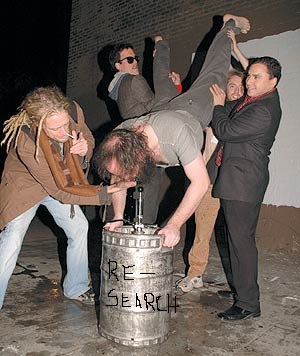
Another metaphor: Research should feel like you are romping through a field of research at warp speed plucking flowers without bothering whether or not they make a pretty bouquet.
I'm going to let you in on a little secret: researching is different than reading (I may have already said this in a previous post). Researching is about gathering possible useful material--researching is fast, furious, and almost unreflective (at first). Researching is RE-SEARCHING or RE(S)EA(R)CHING --reaching. . .reaching out.
Reading Articles (a process)
To narrow down your article selection:
1.) Read abstracts
2.) Read the first couple paragraphs (quickly)
3.) Read the conclusion.
4.) If it still seems relevant, skim paragraphs.
5.) If it is a "useful" article, read most of the article and write an annotated bibliography.
Showing posts with label research. Show all posts
Monday, October 31, 2011
Monday, September 19, 2011
Summary of Research Prospectus
A research paper should. . .
I also explained the research prospectus which can be found on Sakai.
Topics Focus --> Question Focus
We now want to make sure we ask a good research question rather than just circle around a topic. Having a question focus will do 2 things:
- pose an interesting and significant problem
- respond to the problem with a contestable thesis*
- use sources purposefully and ethically
I also explained the research prospectus which can be found on Sakai.
Topics Focus --> Question Focus
We now want to make sure we ask a good research question rather than just circle around a topic. Having a question focus will do 2 things:
- requires you to be a critical thinker who must assess and weigh data and understand multiple points of view
- encourages active construction of meaning
Wednesday, September 7, 2011
Exploring Ideas and Topics
Review Questions:
What is wallowing in complexity?
What is the difference between what describing what an author is saying and what and author is doing?
What is the "believing and doubting" game?
What are the four exploratory writing strategies?
Surprising Thesis Statements: Creating tension:
"Many people believe x, but I am going to show y"
"Points and Particulars": The same thing as arguments/evidence.
Class Commentary:
Today we worked on generating ideas/topics/questions. The suggestions on pg 189 gave us some direction.
I think that coming up with a topic is one of the hardest parts of a research paper. It is very easy to write about a very broad topic that takes books and even careers to cover! The point of the research paper is to focus on one aspect of some of the more general topics we were exploring today.
One of the keys to this I think is to look at problems and issues that relate to your own discipline/major. Rather than think from the perspective of "we" as, say, "college students" or "humanity in general", think from the perspective of "we chemists" or "we health professionals" or "we philosophers" or "we sociologists." Remember, you want to try to enter into an academic community.
I may have mispoke when I emphasized the importance of an "original" thesis or position. There are only so many positions to take on a subject. The key is to determine what community you want to speak with (and hopefully from).
Let's take an example. A few of you seemed to be interested in questions about social networking, but there are several different ways people have addressed social networking. We cannot merely rely on our own experience with these sites to create a research paper. Rather, we need to look at the bigger picture (but perhaps not too big.
The necessity for Research
In order to really get to a workable thesis question, you need to be googling these topics and questions. While wikipedia entries and blogposts may not be a legitimate "academic source" it can help you realize that your initial positions can be further narrowed.
When someone suggested to me they want to talk about social networking, I simply typed "Social Networking" into amazon.com books. I yielded many books on this topic.
If one looks to the left, we see that there are books in "social sciences," "politics," "Marketing."
If I click on "Social Sciences" I get a book that may be a good starting point: The Digital Divide: Arguments For and Against Facebook, Google, Texting, and the Age of Social Networking
If I click on "Politics," I get a book that addresses social networking from a different point of view: Digitally Enabled Social Change: Activism in the Internet Age
This is just amazon!
Library Card Catalog
If I type in "Social networking" in the card catalog I get other results--even more surprising stuff:
We see fascinating sounding books, right? Network Power: the social dynamics of globalization and The healing web: Social networks and human survival.
Now I hope your brain is going nuts thinking about how social networking could affect a very particular aspect of our lives. Just by merely searching the internet, I already have some interesting things to connect social networking to. This is one of the only ways to get interesting topics--so USE YOUR RESOURCES!
Subscribe to:
Posts (Atom)
